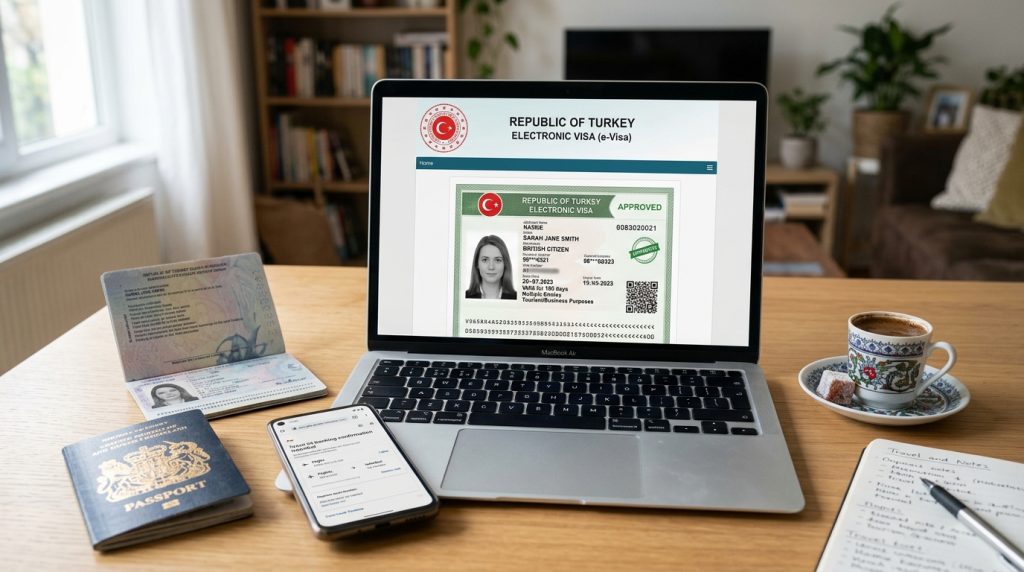
Turkey stands as an exceptional global crossroads where vibrant modern industries blend seamlessly with centuries of rich Mediterranean history. From the bustling maritime ports of Istanbul to the manufacturing districts of Izmir, the country remains a major hub for both commercial traders and leisure vacationers. To accommodate millions of yearly visitors, the Turkish government utilizes an optimized electronic visa (e-Visa) network.
This digital framework completely removes the need to schedule embassy appointments or leave physical passports behind for processing. However, because entry regulations are deeply tied to international diplomatic agreements, understanding how specific regional criteria and administrative filters affect your application is crucial for a smooth journey.
Specialized Pathways for Island Nation Travelers
Turkey’s online visa portal is highly systematic, adapting its mandatory fields and security protocols based strictly on the applicant’s country of citizenship. For many South Asian passport holders, entry into Turkey is granted through a conditional e-Visa framework that rewards travelers who hold strong global travel credentials.
If you are organizing your trip from Colombo or other regional hubs, securing a TURKEY VISA FROM SRI LANKA requires compliance with specific supporting terms. Sri Lankan ordinary passport holders are typically eligible for a single-entry e-Visa allowing a stay of up to 30 days.
To gain system clearance, applicants must hold a valid, unused physical visa or residence permit from a Schengen zone nation, the United States, the United Kingdom, or Ireland. Additionally, the immigration framework requires travelers to confirm a round-trip ticket with approved airlines, keep a valid hotel reservation, and hold a passport that remains valid for at least six months from their arrival date.
Identifying and Preventing System Backlogs
While the electronic portal is built for rapid processing, applications can occasionally face unexpected interruptions if data is entered incorrectly or if supplementary verification filters are triggered by the immigration backend.
When looking at the requirements for a TURKEY VISA FOR BANGLADESHI citizens, understanding what triggers these administrative bottlenecks helps ensure a seamless experience. Delays or immediate rejections are frequently caused by minor clerical mistakes, such as transposing digits in a passport number, mixing up the number zero with the letter “O,” or uploading low-resolution passport scans that the automated system cannot read.
Furthermore, Bangladeshi applicants using the conditional entry track must ensure that their qualifying Schengen or western visa is fully active on the exact day they land in Turkey. If the system flags an expiration mismatch, the application is pushed to manual review, disrupting your departure timeline.
Crucial Checklist for the Departure Gate
Once your electronic travel authorization is successfully delivered to your email inbox, a few physical preparations will guarantee a completely hassle-free transition through Turkish border control.
- Print Hard Copies: Do not rely solely on digital versions saved to your smartphone. Network or power outages at international terminals happen, making a printed copy of your e-Visa essential.
- Carry Your Supporting Visas: If you qualified under the conditional framework, you must carry the physical passport containing your valid Schengen, US, UK, or Irish visa to present to the immigration officer.
- Keep Proof of Funds: Border control authorities reserve the right to verify your financial self-sufficiency, which generally requires a minimum baseline of fifty US dollars for each day of your intended stay.
By maintaining total precision during your digital session and double-checking your regional documentation prerequisites well in advance, you can step onto your flight to Turkey with complete confidence.
